Mezagitamab for immune thrombocytopenia
 Fact-checked by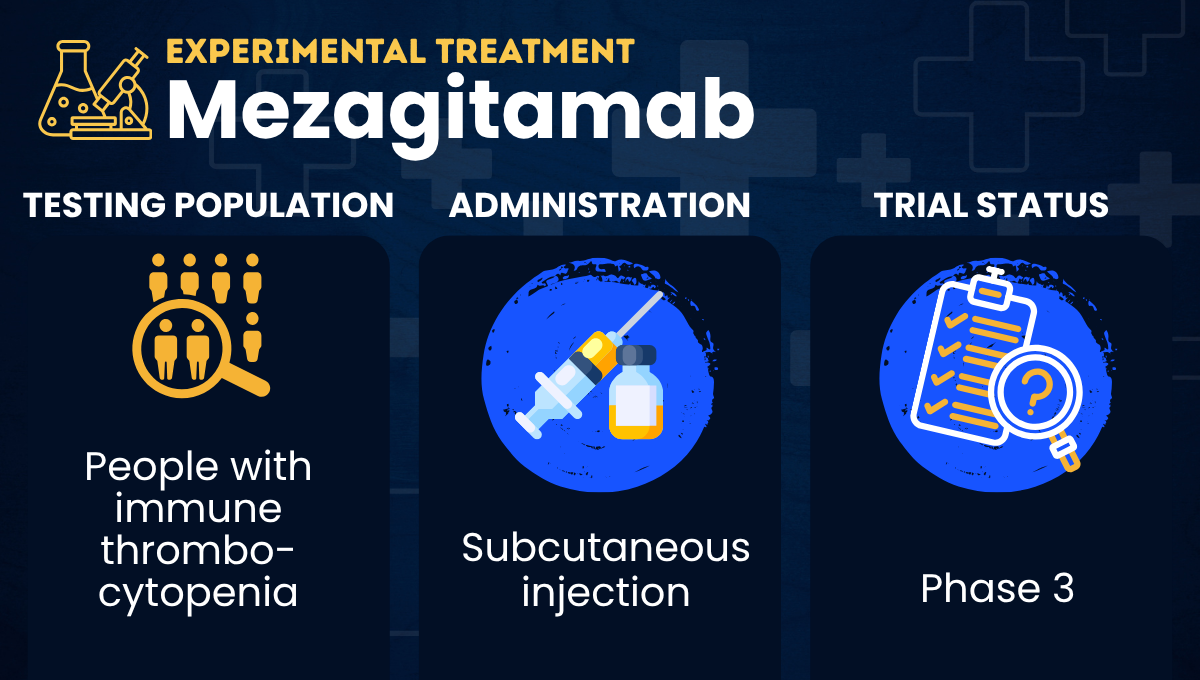
What is mezagitamab for immune thrombocytopenia?
Mezagitamab (TAK-079) is an experimental, immune-modulating antibody therapy that is being explored as a treatment for immune thrombocytopenia (ITP).
ITP occurs when the immune system mistakenly attacks platelets, which are circulating cell fragments that play a crucial role in forming blood clots after injuries. Low platelet counts associated with ITP can lead to easy and excessive bleeding.
Plasma cells, a type of immune cell, help produce the self-reactive antibodies that drive these attacks. Mezagitamab is engineered to bind to CD38, a protein found on the surface of plasma cells and other immune cells, marking them for destruction. By depleting or lowering the number of these cells, the therapy aims to reduce attacks on platelets, potentially easing ITP symptoms.
Takeda, which is developing mezagitamab, is currently conducting a Phase 3 clinical trial to assess the safety and efficacy of the under-the-skin (subcutaneous) injection therapy in people with ITP who couldn’t tolerate or have had an insufficient response to at least one first-line and one second-line therapy.
The U.S. Food and Drug Administration previously granted mezagitamab orphan drug designation for ITP and fast track status for chronic or persistent ITP, which may help expedite the therapy’s development and approval.
Takeda is also assessing mezagitamab’s therapeutic potential for immunoglobulin A nephropathy, an autoimmune disease involving the kidneys.
Therapy snapshot
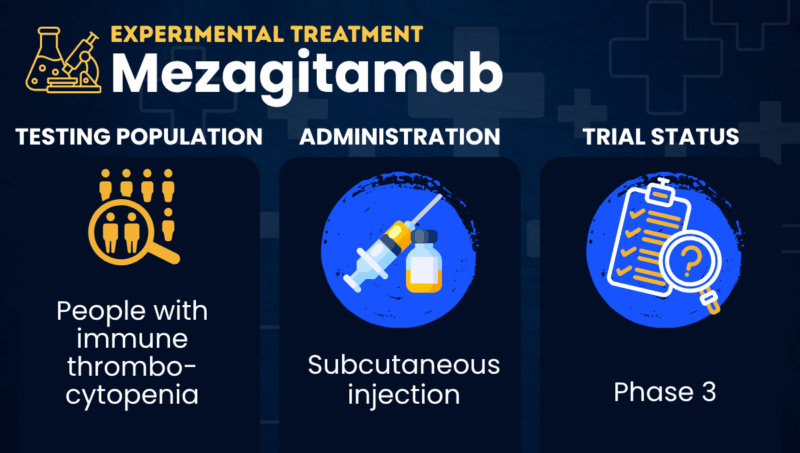
| Treatment name | Mezagitamab |
| Administration | Subcutaneous injection |
| Clinical testing | Currently in Phase 3 testing |
How will mezagitamab be administered in immune thrombocytopenia?
In clinical trials involving people with ITP, mezagitamab has been administered as weekly subcutaneous injections. In an ongoing Phase 3 study, participants are receiving doses for eight weeks, taking eight weeks off, then receiving the medication for eight more weeks.
Mezagitamab in immune thrombocytopenia clinical trials
Mezagitamab has been tested in adults with primary ITP, a type with no clear underlying causes, across a series of clinical trials, including an ongoing Phase 3 trial.
- TAK-079-1004 (NCT04278924), a Phase 2b trial where 41 participants received weekly subcutaneous injections of a placebo or one of three possible doses of mezagitamab (100, 300, or 600 mg). Compared with participants in the placebo group, those in the mezagitamab treatment groups had an improved platelet response after eight weeks of treatment and eight weeks of observation, with greater effects seen with higher doses. In the highest dosage group, 90.9% of participants showed a clinically meaningful increase in platelet counts, meaning an increase of at least 20,000 platelets per microliter from the start of the study.
- TAK-079-3002 (NCT06722235), a Phase 3 trial where approximately 171 adults will receive mezagitamab or a placebo as weekly subcutaneous injections. The 24-week (about six-month) treatment period will include a total of 16 weeks on the assigned therapy and eight weeks off. Study investigators will measure participants’ platelet counts throughout the trial and monitor treatment safety. The study’s primary goal is to determine the percentage of individuals who have a durable platelet response, meaning a platelet count of 50,000 platelets per microliter or more on at least four of the six platelet measurements carried out during the final six weeks of the trial.
Participants in either one of these trials may be eligible to join an extension study (NCT06948318), where they will continue to receive mezagitamab as needed for up to two years.
Mezagitamab side effects
Takeda has not yet released detailed safety data from TAK-079-1004. However, the company noted the therapy’s safety profile was favorable, with results being consistent with those of earlier studies. In a previous Phase 1 study (NCT02219256) involving healthy volunteers, the most common side effects seen in those receiving subcutaneous mezagitamab included:
- redness or pain at the injection site
- headache
- cold-like symptoms
- feeling hot
- throat pain.
Bleeding Disorders News is strictly a news and information website about the disease. It does not provide medical advice, diagnosis, or treatment. This content is not intended to be a substitute for professional medical advice, diagnosis, or treatment. Always seek the advice of your physician or other qualified health provider with any questions you may have regarding a medical condition. Never disregard professional medical advice or delay in seeking it because of something you have read on this website.