Being a medical oddity means not having a simple urgent care visit
An antibiotic prescribed for a dental infection proved to be not strong enough
Written by |
Note: This column describes the author’s own experiences with cefdinir and Soliris (eculizumab). Not everyone will have the same response to treatment. Consult your doctor before starting or stopping a therapy.
Seeking out-of-the-norm medical care is always an interesting adventure for me. Before I became sick with multiple rare diseases, a trip to an urgent care clinic or emergency room was pretty typical: Check in, fill out paperwork, be seen for 30 to 60 seconds, and be sent on my way. However, as a complicated medical oddity, that’s no longer the case.
I’ve been fighting a horrendous dental infection for a few weeks. This can be a common concern for anyone, but I have a few additional layers of complications. For starters, I don’t have much dental insurance. My Medicare plan only covers up to $500 per year, so that might cover the cost of an extraction or two, but not much else. Meanwhile, I have extensive dental problems.
I also live with multiple diseases: immune thrombocytopenia (ITP), atypical hemolytic uremic syndrome (aHUS), thrombotic thrombocytopenia purpura (TTP), lupus, and Ehlers-Danlos syndrome (EDS). Even when I’m not in an active flare of one of these, there’s a chance an infection or medication for an infection can interact with one of my rare disease treatments. Or an infection can trigger a flare.
I also have a number of comorbidities that must be considered when treating an infection. Stage 4 chronic kidney disease (CKD) is the root cause of my dental issues. CKD and dental problems are systemically linked, meaning my bad kidneys cause dental issues, and my dental issues cause problems with my kidneys.

A not-so-simple-trip to urgent care
So when this recent infection became too much to manage at home, my hematologist prescribed an antibiotic. I’m allergic to most antibiotics used for dental infections, so I was prescribed cefdinir, one I hadn’t heard of before. But when I finished it, I still had pain and swelling, perhaps because the medication wasn’t strong enough for me. But here I was, in the middle of the holiday season and unable to get an appointment with my primary care doctor or hematologist, so I had to go to urgent care.
This is the amusing part. When you check in, you are required to fill out a few pages of basic information, including your reason for being there, a brief medical history, a list of current medications, and contact information. But this is never a small task for me. I’m on nine different medications and have five rare diseases. So my paperwork is always littered with a ton of information.
I was called back to check my vitals. Unbeknownst to this poor nurse, I have uncontrolled hypertension from aHUS and CKD. And when I’m in pain or have swelling, it’s much worse. The machine beeped erratically, as my blood pressure was 195/160 mmHg. The nurse blinked hard and looked at the machine and back at me. I forgot to warn her it would be bad. I had to explain my health conditions to keep her from calling for an ambulance!
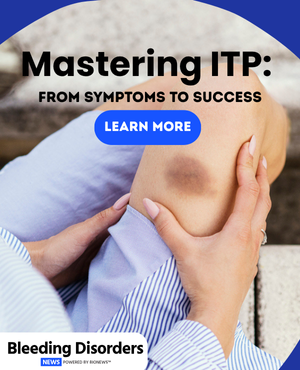
Then there were the other symptoms. My hematologist feared that having an infection this long could trigger a flare of one of my “main diseases,” and I absolutely did have additional symptoms. I was covered in bruises in strange places — my fingers, the palm of my hand, forearm, neck, thighs, and feet — and my fatigue was much worse than usual. I also felt weak; climbing stairs had become insanely difficult. It became hard to hold myself up. I could be having an ITP flare, so blood work was needed.
The blood work confirmed my platelet count was way low. A normal platelet count is 150,000-450,000 per mL, and mine is usually around 250,000. But that day, I was at 53,000. My “quick” urgent care visit ended with antibiotics, a round of steroids, and a blood transfusion at the chemo lab where I receive my aHUS treatment.
I did learn why I was given an unusual antibiotic before. The urgent care doctor said the stronger one would put me at risk for a C. diff infection, due to my aHUS being treated with Soliris (eculizumab). Still, the doctor and I agreed that having this infection for so long was a greater risk, so we moved forward with the stronger medication.
All this just goes to show that a simple trip is never a simple trip for me. With so many diseases, so many potential medication complications, so many comorbidities, and so many ongoing issues, it makes me an exciting and challenging case for any medical team.
Note: Bleeding Disorders News is strictly a news and information website about the syndrome. It does not provide medical advice, diagnosis, or treatment. This content is not intended to be a substitute for professional medical advice, diagnosis, or treatment. Always seek the advice of your physician or other qualified health provider with any questions you may have regarding a medical condition. Never disregard professional medical advice or delay in seeking it because of something you have read on this website. The opinions expressed in this column are not those of Bleeding Disorders News or its parent company, Bionews, and are intended to spark discussion about issues pertaining to bleeding disorders.