
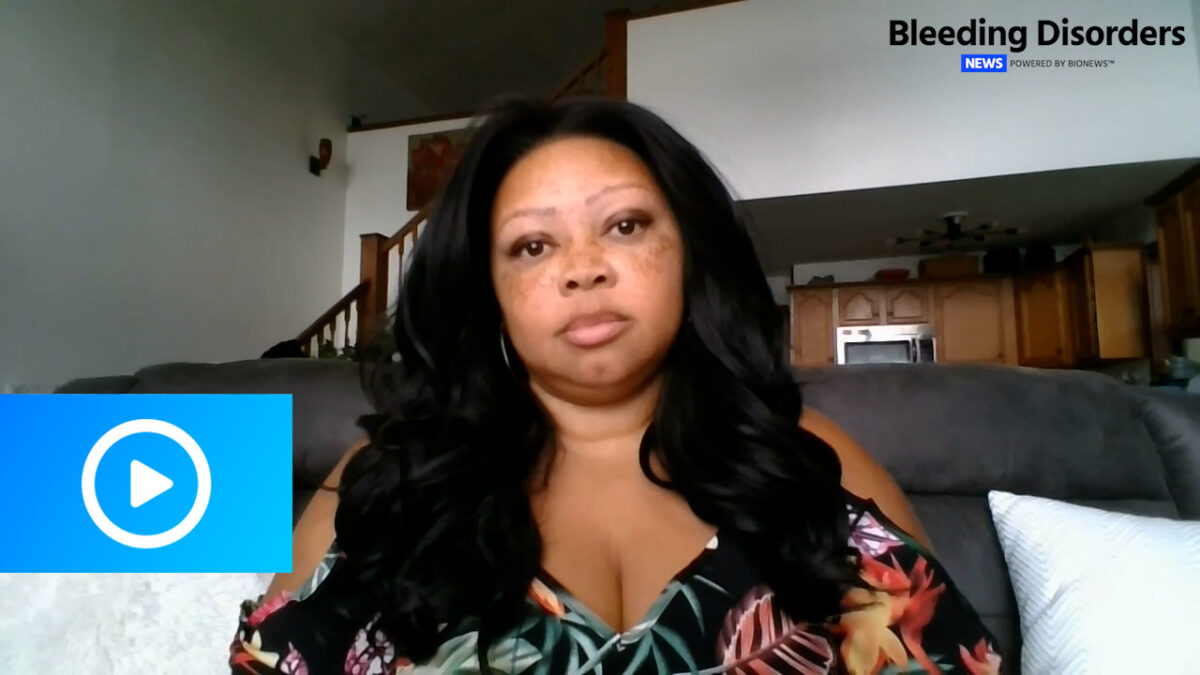
Shalana “Shay” Jordan shares her journey with immune thrombocytopenia (ITP), from navigating uncertainty around symptoms and diagnosis to learning the importance of listening to her body and seeking timely care. She reflects on resilience, self-compassion, and the strength found in giving herself grace through setbacks and recovery. You can read more of her reflections in her column One Drop at a Time.
Transcript
Your immune system — it thinks your platelets are an enemy. It thinks something else is going on in your body and your platelets shouldn’t exist there.
That it wants to fight it and destroy it. So my platelets were just being eaten away before my body could make more, which of course affects red blood cell count and your energy. You need blood to live.
There’s not really a test for ITP. There are all kinds of symptoms, but it also mirrors so many other diseases. Without a test, it’s more like they’re testing by process of elimination. They’ll say, “OK, it’s not this, it’s not this, it’s not this.”
So they didn’t know if I was anemic, if it was a lupus flare, or what. So after more and more tests, they figured out that it was my platelets specifically that were really, really low.
I mean, they were down at 55. Normally, I think platelets are between 100 and 500 or something in normal numbers. They pretty much were like, “We don’t know how you’re even walking around and have any energy to do anything. You know, have you been at work?” I’m like, “Yeah, I came from work to this.” Like, what?
And with blood transfusions, I already started feeling better within hours. I wasn’t going to run outside and run a marathon, but I had more energy, I felt better, and I didn’t hurt all over. So it just made the most sense that that was what it was.
First and foremost, go get seen. Even if you don’t have insurance, if you think something is not right with your body, go get seen. I have suffered a lot of permanent organ damage and several comorbidities and issues because I didn’t go see a doctor.
I brushed it off as being anemic, as being tired, as not sleeping, as sitting on my phone late at night, as being dehydrated. I always had an excuse, and this happened both times. And I nearly died both times because of it.
So, first and foremost, if you don’t feel right, go get seen. And the next part is just give yourself grace and give yourself time to rest. It’s hard because your mind is fine, but your body is not. Cognitively, you can do anything, but if your body is being affected by disease regularly, you feel like some kind of failure, like people might think you’re lazy.
And autoimmune diseases are big on invisible illnesses — because we can put on our makeup, put on our wig, and look fantastic, but inside we are sick. We are struggling, and there are days where we just can’t function. You need to give yourself time to rest and to heal, because your body needs it.